
MATREP #11, 2023MAR07
How NOT to train when you're injured

I got behind on my mat reports, so today’s will be a combo from Sunday afternoon open mat at the Appalachian Strangler Syndicate and Tuesday 10am class at Memento Combat Sports. Different location/format, same basic lesson.
Before I dig in on the meat of the report, I gotta put it out there. I think the whole “perpetually broken brown-belt” meme is the most pussy-ass phenomenon. I’ve been perpetually broken since white belt. Get tougher already.
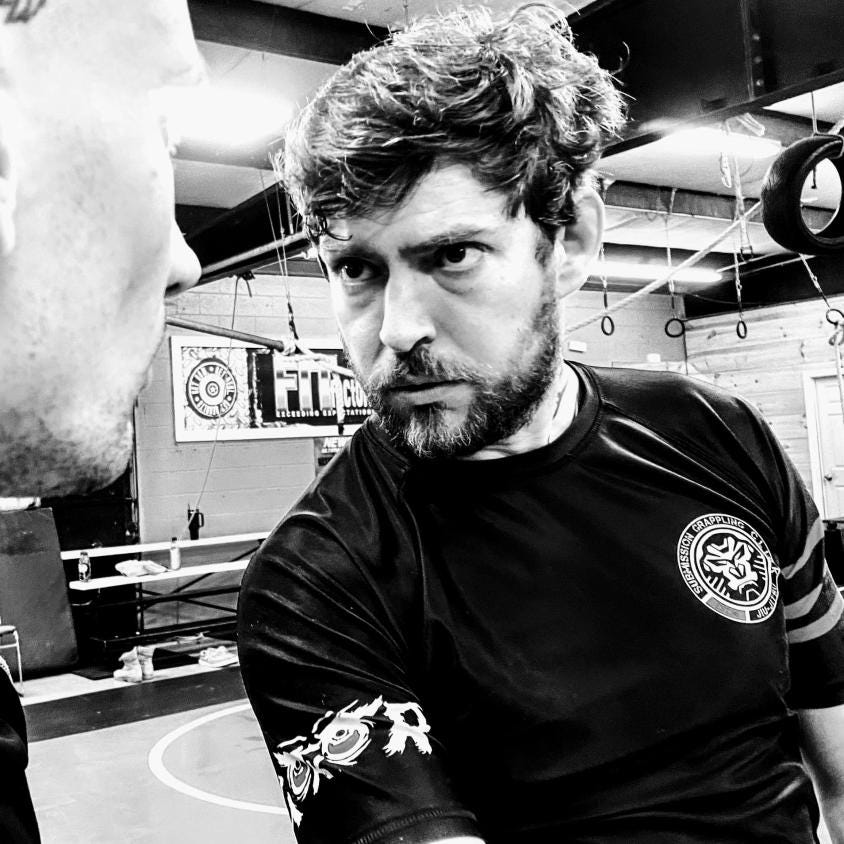
Apparently the squirrel is evolutionarily superior
I heard Aaron Milam talking one time about the evolution of his game as a response to injury. I can’t remember if he said it in person one of the times I used to drop into RGA Portland or if it was an interview I heard, but it stuck with me. What he said was simple, and I’m sure that others have said the same thing, but him saying it stuck with me so he gets credit in my boat. He talked about how injuries at various times had impeded his ability to play his “A-game” and that he had to fundamentally alter his game multiple times during his jiu jitsu career to accommodate for injuries. He had to find new, creative solutions to problems because his body literally wouldn’t do the task in the way that was a “known solution”.
So when people get hurt (and especially if they just seem to stay hurt) and then get worse at the game, I know they’re missing out on something big.
I can’t handle pretty much any pressure on my neck right now. Which is miserable, because for the past two years I’ve been building significant expertise on wrestling from bottom (pretty much giving away front headlock and other “losing positions” and then winning the battle for my opponent’s hips through superior angles and timing). So for right now, that’s gone. Completely. You grab my head, I roll over and you get a free mount.
On top of that, I had just started working deep into double under and over under passing in the past few months. And it was going well. That’s also on hold.
Oh well. The game is absolutely huge. I’m not even a little bent out of shape about losing access to one area. I’ll heal up, and I’ll be even better at my preferred areas because I’ll have new entry/exit points. Or I won’t get better and I’ll finally put my Masters World Champion dreams to rest.
But there’re two things I won’t do. I won’t quit the game (or bitch about how it’s unfair). And I won’t keep doing the same shit that my body doesn’t want me to do. Two guaranteed results there. Keep getting hurt, and become shamefully bad (when you try and fail to live/re-live your glory days, you didn’t grow old, you just didn’t adapt).
So what’s the right way to train when injured?
First swallow your fool pride and just tell your training partners that you can’t play the full game. I literally shout it out once class is done and open rounds are beginning, before the music gets cranked back up. “Whoever wants easy rounds, I’m your guy!”
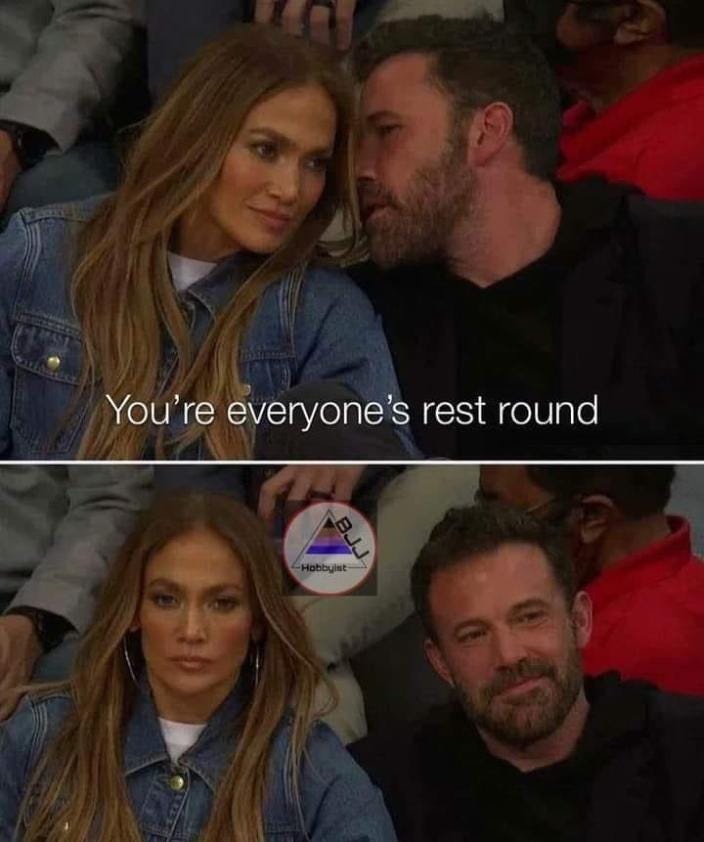
Trouble in paradise aside, in the past week I have heard a surprising number of claims between gasping breaths from training partners about how hard it is to retain guard for a full round.
So maybe it isn’t an easy round. The person can either play legs only against me (boring), or they can retain guard/sweep while I work outside/loose passing. Yeah, I’m being picky. I’ve got some seniority, so I use it. Still passing head low, bear crawl style, but a bit less aggressive because it’s just not fair to say a person can’t touch my head if I put it in range. The onus is on me to keep it out of range.
So when my neck is well enough to get back to passing double under, single under, over under, and duck under in addition to the outside movement, my footwork and hand positioning are going to be super-primed.
The worst thing I could have done would have been to go backwards.
How easy would it have been to say, “Well damn, can’t continue with my new passing project, better go back to my old tried and true knee slice.”
At Fit Factory, there is a man named Froy. He is 48 and he is one of the absolute toughest rollers I’ve ever had. He is Gene Click’s first black belt. He sets the standard high. He also has the best guard retention of anyone I’ve ever rolled against. And it’s all in his frames, he doesn’t even need his legs to keep you from passing (though if he does, you might as well be prepared to sweat on that outside margin cause you’re like the balrog in LOTR).
There’s a story as to why Froy is so good at framing people when they’re trying to pass. First, he has only ever trained under Gene, and Gene is a good 50 pounds heavier, minimum. And you know that if he’s the first black belt, then, well, he’s been put through the ringer. But second, and more importantly, a few years ago, Froy messed up one of his legs very badly, the kinda thing that makes a lot of people quit entirely, or at least disappear for a year or two and come back old and crusty.
What does Froy do? He gets a belt and cinches his legs together and continues to train for MONTHS without being able to use his legs as a part of his guard retention. Only thing he could really do with his legs in this orientation was shrimp/hip escape, and not even to a complete degree.
And now, I, 12 years younger than him. Stronger, faster, perhaps 10 pounds heavier, and not a chump, have to put forth 90-100% effort to successfully pass, and even more to keep it long enough to mount a legitimate submission attempt.
I want to be Froy when I grow up. And I know exactly how to get there.
When I get hurt, don’t quit. Don’t keep doing the shit that was getting me hurt. Don’t downgrade my expectations of effectiveness. Don’t be too proud to tell my training partners what I need.
Do modulate my strategy to develop my game in an area that doesn’t inflame my injury. Do explore new solutions to old problems (the ripest area for growth is exactly in the area where a problem persists but the tried and true strategy can’t be used).
Be like Aaron. Be like Froy. Get hurt, stay in the game, innovate through your injury.
Good Hunting,
Charles Batey